
10 Best Contact Center AI Software Platforms (2026)

- Published:
- Updated:
- Authored by
-
 Richard James Director of Organic Growth and CX
 - Reviewed by
-
 Sean Minter Founder, CEO
Contact center AI software uses generative AI (GenAI) and large language models (LLMs) to resolve some or all parts of operations within the contact center, but what that actually means varies dramatically depending on who the AI serves and what problems it solves.
Contact center AI software includes leader-facing AI (dashboards, QA automation, performance visibility), agent-facing AI (real-time guidance, coaching, development), customer-facing AI (chatbots, virtual agents, smart IVR), or CCaaS-bundled AI within platforms like NICE, Genesys, and Five9.
Generative AI features are table stakes for contact center AI software in 2026. Buyers evaluating contact center AI should prioritize how vendors handle data integration across systems, whether AI capabilities work from a shared data foundation or operate independently, and how AI-driven insights reach the roles that need to act on them.
The best contact center AI software of 2026 varies depending on the problems you're solving for. Before selecting a vendor, evaluate:
- Types of Contact Center AI Software: The gap between leader-facing AI, agent-facing AI, and customer-facing AI.
- Contact Center AI Software Features: Which vendors unify intelligence vs. those offering disconnected point solutions.
- Contact Center AI Software Limitations: Why many AI implementations fail to deliver ROI.
- Evaluation Criteria: How vendors stack up on the criteria that matter most to CX leaders and contact center leadership.
Top Pick for 2026: AmplifAI ranks #1 on our list of contact center AI software in 2026 for its AI-native architecture powered by agnostic data integration across 150+ sources including CCaaS, CRM, WFM, speech analytics, and legacy systems, delivering leader-facing and agent-facing AI that drives conversation intelligence, automated QA, coaching workflows, performance management, and gamification from one unified data layer. Named a Leading provider in the 2026 CMP Research Prism for Automated QA/QM, AmplifAI turns AI-driven insights into automated coaching, recognition, and next best actions across the entire contact center.
Topics Discussed:
Compare the Best Contact Center AI Software of 2026
Compare the 10 best contact center AI software for 2026, evaluated based on types, features, and evaluation criteria that determine real-world impact.
| Rank | Contact Center AI Software | Overview |
|---|---|---|
| 1 | AmplifAI | AmplifAI ranked #1 for contact center AI software, an AI-native platform powered by agnostic data unification across 150+ sources, delivering leader-facing and agent-facing AI including next-best actions for every role, high-performer persona modeling, conversation intelligence, automated QA (AQA), coaching workflows, performance dashboards, and gamification from one unified data layer. Named a Leading provider in the 2026 CMP Research Prism for Automated QA/QM. |
| 2 | NICE CXone | NICE CXone is an enterprise-grade CCaaS platform with embedded contact center AI across workforce engagement, quality management, and customer-facing virtual agents. Best suited for large-scale operations already committed to the NICE ecosystem. |
| 3 | Genesys Cloud | Genesys Cloud offers AI-powered workforce engagement, predictive routing, and customer-facing automation within its CCaaS platform. Strong agent assist and bot capabilities for organizations using Genesys as their primary contact center infrastructure. |
| 4 | Five9 | Five9 is a cloud CCaaS platform with contact center AI powering IVA, agent assist, and workforce optimization. Strong customer-facing automation with growing agent-facing capabilities within its ecosystem. |
| 5 | Dialpad | Dialpad offers AI-native contact center AI unifying communications with built-in transcription, sentiment analysis, and real-time agent assist. Combines UCaaS and CCaaS with customer-facing automation in a single platform. |
| 6 | Verint | Verint offers contact center AI through specialized bots across workforce engagement, quality, and knowledge management. Enterprise-focused with deep analytics capabilities but requires significant configuration to connect workflows. |
| 7 | Nextiva | Nextiva provides unified communications with contact center AI capabilities including virtual agents, IVR, and agent assist features. Mid-market focused with straightforward deployment. |
| 8 | Observe.AI | Observe.AI contact center AI combines conversation intelligence with automated QA scoring and real-time agent assist. Strong speech analytics and compliance capabilities for agent-focused performance improvement. |
| 9 | Balto | Balto contact center AI specializes in real-time agent guidance with live prompts, script adherence tracking, and in-call coaching. Focused exclusively on agent-facing assistance during active conversations. |
| 10 | Google CCAI | Google CCAI (Contact Center AI) powers customer-facing virtual agents and conversational IVR through Dialogflow. Integrates with partner CCaaS platforms but does not address agent performance management or operational workflows. |
| Review Methodology: The 10 best contact center AI software vendors are evaluated using a weighted analysis of contact center AI software types, features, and evaluation criteria. The 2026 CMP Research Prism Report is referenced as a companion evaluation for vendors appearing in both analyses. | ||
2026 CMP Research Prism for Automated QA/QM
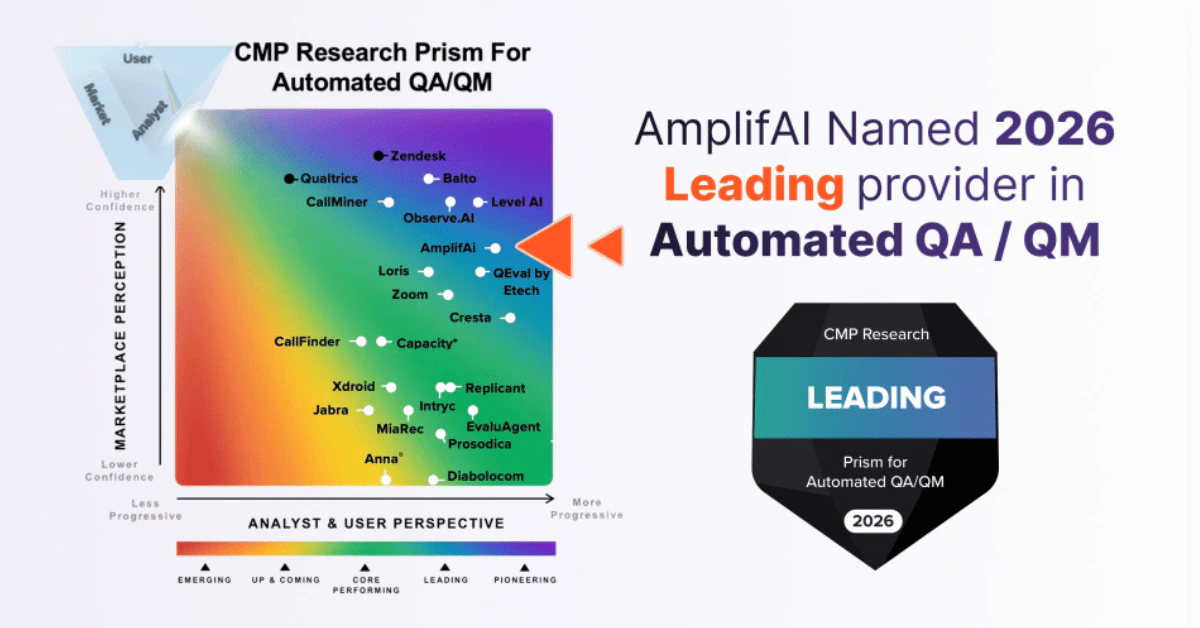
AmplifAI was named a Leading provider in the 2026 CMP Research Prism for Automated QA/QM, earning the highest possible progressive score for integration, AI accuracy, and data security.
CMP Research evaluated 22 automated QA/QM solution providers in its Q1 2026 Prism Report, scoring each across ten key investment criteria.
Four of the contact center AI software vendors featured in this guide also appear in the CMP Prism evaluation, making it a valuable companion for validating your shortlist.
What is Contact Center AI Software
Contact center AI software uses generative AI to resolve some or all parts of operations within the contact center, what that means varies dramatically depending on who the software serves and what problems it solves.
Contact center AI software is broken down into six distinct categories including:
- Unified Contact Center AI: Connects data from all systems into a single AI-ready layer, delivering insights and actions across roles.
- Internal AI / BI-Led Tools: Custom-built dashboards, spreadsheets, and SQL-based scoring created by internal teams using general-purpose BI tools.
- Leader-Facing Contact Center AI: Provides dashboards, automated QA, and performance visibility for supervisors, managers, and executives.
- Agent-Facing Contact Center AI: Delivers real-time guidance, coaching prompts, and development tools directly to frontline agents.
- Customer-Facing Contact Center AI: Handles customer interactions through chatbots, virtual agents, and smart IVR before agent involvement.
- CCaaS-Bundled Contact Center AI: Native AI features embedded within CCaaS platforms like NICE, Genesys, and Five9, tied to that vendor's ecosystem.
Types of Contact Center AI Software
Contact center AI software falls into six types, each addressing different roles, workflows, and layers of contact center intelligence. Understanding whether a vendor delivers leader-facing AI, agent-facing AI, customer-facing automation, or CCaaS-bundled AI determines which type fits your contact center.
| Contact Center AI Type | What It Does | Vendors |
|---|---|---|
| Unified Contact Center AI | Connects all contact center data sources — CCaaS, CRM, WFM, QA, coaching, surveys, and legacy systems — into a single AI-ready layer. Transforms disconnected insights into role-specific actions that reach executives, QA teams, team leads, and agents. Enables AI to see the complete operational picture rather than operating in isolated silos. | AmplifAI |
| Internal AI / BI-Led Tools | Custom-built dashboards, SQL-based scoring, spreadsheet automation, and manual reporting workflows created by internal teams. Attempts to replicate contact center AI capabilities using general-purpose BI tools. Requires significant maintenance, lacks real-time data unification, and cannot scale automated actions across roles. | Excel, in-house builds, Power BI, SQL scripts, Tableau |
| Leader-Facing Contact Center AI | Provides dashboards, automated QA scoring, coaching alerts, and performance visibility for supervisors, managers, and executives. Surfaces trends, flags risks, and delivers actionable insights to decision-makers. Ranges from basic reporting dashboards to advanced platforms that trigger coaching workflows and track improvement over time. | AmplifAI, Genesys, NICE, Observe.AI, Verint |
| Agent-Facing Contact Center AI | Delivers real-time agent assist, coaching prompts, call summarization, knowledge surfacing, and performance nudges directly to frontline agents. Includes live guidance during conversations, post-call feedback, and development workflows. Varies from in-call script prompts to comprehensive coaching and performance tools. | AmplifAI, Balto, Dialpad, Genesys, NICE, Observe.AI |
| Customer-Facing Contact Center AI | Handles customer interactions before agent involvement through chatbots, smart IVR, virtual agents, and GenAI-powered self-service. Automates authentication, intent capture, and Tier 1 support. Reduces inbound volume and accelerates resolution for routine inquiries while routing complex issues to live agents. | Dialpad, Five9, Genesys, Google CCAI, Nextiva, NICE |
| CCaaS-Bundled Contact Center AI | Native AI features embedded within CCaaS platforms for routing, transcription, sentiment scoring, and agent assist. Operates within the vendor's ecosystem with limited visibility into external systems. Optimizes interactions managed by the CCaaS but requires additional integration or partner tools for cross-platform insights. | Dialpad, Five9, Genesys, Nextiva, NICE |
| This market taxonomy segments contact center AI software by who it serves and how it operates. Evaluate which types your contact center requires based on the roles you need AI to support and whether your AI capabilities need to work across multiple systems or within a single platform. | ||
For a deeper breakdown of the software categories within each type, including vendor examples, see our latest Contact Center AI Buyers Guide.
Limitations of Contact Center AI Software
Each type of contact center AI software has limitations. Know what each type does well and where it falls short to match solutions to your contact center's needs.
Unified Contact Center AI Limitations
Unified contact center AI software connects data across systems and delivers insights to multiple roles, but unified platforms require integrations to every data source in your stack. Implementation complexity scales with the number of CCaaS platforms, CRMs, and legacy systems in your environment.
Internal AI and BI-Led Tools Limitations
Internal contact center AI builds using Power BI, Tableau, SQL scripts, and spreadsheets can replicate some contact center AI functions, but internal tools require significant ongoing maintenance and lack real-time data unification. Without integration to coaching, QA, and performance systems, insights from internal tools sit in dashboards rather than driving frontline improvement.
Leader-Facing Contact Center AI Limitations
Leader-facing contact center AI provides visibility into performance, quality, and outcomes for supervisors, managers, and executives, but leader-facing tools vary significantly in depth with some offering dashboards and reporting without connecting insights to coaching workflows or agent development.
Agent-Facing Contact Center AI Limitations
Agent-facing contact center AI delivers real-time guidance, coaching prompts, and development tools directly to agents, but agent-facing solutions range from narrow point solutions to comprehensive platforms.
Customer-Facing Contact Center AI Limitations
Customer-facing contact center AI handles interactions through chatbots, virtual agents, and smart IVR before customers reach a live agent, but customer-facing AI does not address internal operations. Performance management, coaching, QA, and agent development fall outside customer-facing scope.
CCaaS-Bundled Contact Center AI Limitations
CCaaS-bundled AI offers native features tightly integrated within their platform's infrastructure, but CCaaS AI primarily operates on data within that vendor's ecosystem. Contact centers using multiple systems including external CRM, WFM, QA tools, coaching platforms, and legacy systems find that CCaaS AI cannot access or unify data outside the platform without extensive customizations, if they can do it at all.
The Underlying Problem With Contact Center AI is Incomplete Data
Each type of contact center AI software operates well within its own boundaries, but most contact centers do not operate within a single boundary. Your data lives across CCaaS platforms, CRM systems, workforce management tools, QA platforms, coaching systems, survey tools, and legacy applications. When each AI operates in its own silo, insights stay fragmented, actions remain disconnected, and measuring whether your AI implementation actually improves outcomes becomes nearly impossible.
Incomplete data creates measurement gaps, limiting what AI can discover on its own.
What Contact Center AI Software Needs to Succeed
Contact center AI software only works when it has access to the data it needs, can deliver insights to the right role, and connects detection to action. Without these three elements, AI is generating reports instead of outcomes.
Unified AI-Ready Data Foundation
Contact center AI needs real-time access to all your systems, including QA evaluations, WFM schedules, CRM records, coaching history, customer surveys, compliance logs, and performance metrics. When AI can only see one or two of these sources, it draws conclusions from incomplete information.
Ask vendors: What data sources does your AI connect to, how often does it refresh, and can it access systems outside your platform?
Role-Specific Action Delivery
Insights need to reach the right role at the right time. Executives need strategic visibility across teams and sites, QA managers need compliance alerts and evaluation trends, team leads need coaching triggers and agent performance context while agents need development feedback and recognition.
Ask vendors: How does your AI determine what each role sees, and does it push actions or wait for users to pull reports?
Closed-Loop Workflows
Contact center AI needs to close the loop from insight to intervention to measurement. Closed-loop workflows connect QA to coaching, coaching to performance, and performance back to AI-driven recommendations.
Ask vendors: Show me how an insight detected today becomes an action taken tomorrow and an outcome measured next month.
Contact Center AI Software Features
Contact center AI software spans multiple capability areas depending on type and use case from quality management and coaching to customer-facing automation and real-time agent support.
| Contact Center AI Software Feature | Description | Vendors |
|---|---|---|
| Data Integration & Unification | Consolidates data from CCaaS, CRM, WFM, QA, surveys, and legacy systems into a unified AI-ready layer for cross-functional analysis and action. | AmplifAI |
| Auto QA | AI-driven scoring of 100% of interactions without manual sampling, flagging compliance risks, sentiment patterns, and coaching opportunities. | AmplifAI, Dialpad, Genesys, NICE, Observe.AI |
| Quality Management | Manages QA programs at scale with scorecard calibration, evaluation workflows, dispute resolution, and audit trails for compliance governance. | AmplifAI, Genesys, NICE, Observe.AI, Verint |
| Performance Management | Tracks agent, team, and org-wide KPIs through role-based dashboards, benchmarking, and trend analysis to surface improvement opportunities. | AmplifAI, Genesys, NICE, Verint |
| AI-Enabled Coaching | Delivers next-best coaching actions, measures coaching effectiveness, tracks performance lift, and provides coach-the-coach development through closed-loop QA-to-outcomes workflows. | AmplifAI |
| Speech Analytics & Conversation Intelligence | Transcribes and analyzes voice interactions to detect sentiment, topics, silence, and behavioral patterns across customer conversations. | AmplifAI, Dialpad, Genesys, NICE, Observe.AI, Verint |
| Gamification & Recognition | Drives agent engagement through leaderboards, badges, challenges, and real-time recognition tied to performance outcomes and coaching goals. | AmplifAI, Genesys, NICE |
| BPO Vendor Management | Provides oversight across outsourced operations with vendor benchmarking, SLA tracking, and standardized performance visibility across internal and external teams. | AmplifAI |
| Customer Intelligence | Aggregates voice-of-customer insights from interactions to identify trends, churn signals, product feedback, and CX improvement opportunities. | AmplifAI, Genesys, NICE, Verint |
| Virtual Agents & Chatbots | Handles customer inquiries through AI-powered conversational interfaces across chat, voice, and messaging channels before agent escalation. | Dialpad, Five9, Genesys, Google CCAI, Nextiva, NICE |
| Smart IVR & Self-Service | Uses natural language understanding to route callers intelligently and resolve common requests without agent involvement. | Dialpad, Five9, Genesys, Google CCAI, Nextiva, NICE |
| Real-Time Agent Assistance | Provides live prompts, script guidance, and knowledge surfacing during active customer interactions to support agent performance in-the-moment. | Balto, Dialpad, Genesys, Nextiva, NICE, Observe.AI |
| Feature Depth vs. Feature Breadth: Contact center AI vendors list similar capability categories including Auto QA, speech analytics, coaching, real-time assist, and AI coaching, but implementation depth varies by vendor type and architecture. When evaluating features, ask vendors to demonstrate how each capability works in your environment rather than accepting checkbox comparisons at face value. | ||
Contact Center AI Software Evaluation Criteria
Contact center AI software platforms vary widely in integration depth, workflow design, and intended impact. The following table covers what to prioritize when comparing vendors, from data unification and deployment speed to security and long-term support.
| Contact Center AI Software Evaluation Criteria | Why It Matters |
|---|---|
| Data Integration Depth | Can it unify ALL sources—CCaaS, CRM, WFM, QA, surveys, legacy systems? Or just its own ecosystem? AI is only as powerful as the data it can access. |
| Vendor/Platform Independence | Does it work with your existing stack or lock you into one ecosystem? The best contact center AI layers over your current infrastructure without forcing replacements. |
| Role-Specific Action Delivery | Does it serve agents, supervisors, QA leads, and execs with tailored insights—or one-size-fits-all dashboards? Different roles need different views and actions. |
| Closed-Loop Workflows | Does insight lead to action? QA findings should trigger coaching, coaching should improve performance, performance should drive recognition. Disconnected tools create disconnected results. |
| Time to Deployment | Weeks or months? Complex implementations delay ROI and strain internal resources. Rapid deployment with guided onboarding accelerates time to value. |
| Measurable Outcomes | Can they prove performance lift, not just show dashboards? Look for vendors who track coaching effectiveness, KPI improvement, and business impact—not just activity metrics. |
| Security & Data Privacy | How does the platform handle sensitive customer data? Evaluate SOC 2 compliance, data residency options, encryption standards, and AI model training policies. |
| Customer Success & Support | Implementation expertise? Ongoing optimization? Or just software and a support ticket queue? Choose partners who invest in your success beyond the sale. |
| Decision Logic: Selecting contact center AI software requires matching the solution type to the problem you're solving. Unified AI, leader-facing AI, agent-facing AI, customer-facing AI, CCaaS-bundled AI, and internal BI-led tools each serve different needs. Evaluate vendors based on which type of contact center AI your organization requires, then apply the criteria most relevant to that category. | |
Best Contact Center AI Software
The best contact center AI software of 2026 ranked by coverage across contact center AI types, features, and evaluation criteria. Each vendor review includes a capability breakdown, best-fit use cases, and considerations.
Use the snapshot below to see which vendors offer unified contact center AI, leader-facing AI, agent-facing AI, customer-facing AI, and whether AI is bundled within a CCaaS platform or working independently.
| Contact Center AI Software | Unified AI | Leader-Facing AI | Agent-Facing AI | Customer-Facing AI | CCaaS-Bundled |
|---|---|---|---|---|---|
| AmplifAI | ✅ | ✅ | ✅ | ❌ | ❌ |
| NICE CXone | ❌ | ⚠️ | ✅ | ✅ | ✅ |
| Genesys Cloud | ❌ | ⚠️ | ✅ | ✅ | ✅ |
| Five9 | ❌ | ⚠️ | ✅ | ✅ | ✅ |
| Dialpad | ❌ | ⚠️ | ✅ | ✅ | ✅ |
| Verint | ❌ | ⚠️ | ✅ | ⚠️ | ❌ |
| Nextiva | ❌ | ⚠️ | ✅ | ✅ | ✅ |
| Observe.AI | ❌ | ⚠️ | ✅ | ❌ | ❌ |
| Balto | ❌ | ⚠️ | ✅ | ❌ | ❌ |
| Google CCAI | ❌ | ❌ | ⚠️ | ✅ | ✅ |
| How to Read This Matrix: ✅ indicates full capability in that type, ⚠️ indicates partial capability or platform limitations, and ❌ indicates the vendor does not operate in that category. No single vendor covers all five types of contact center AI. Use this matrix to identify which vendors serve the types your organization needs, then apply the evaluation criteria relevant to that category. | |||||
Editor's note: This guide provides an in-depth look at each contact center AI software vendor, covering capabilities, differentiators, and best-fit use cases to help you find the right match for your contact center. This list is regularly updated as vendors upgrade their product features, AI capabilities, and as new vendors emerge.
1. AmplifAI Contact Center AI Software
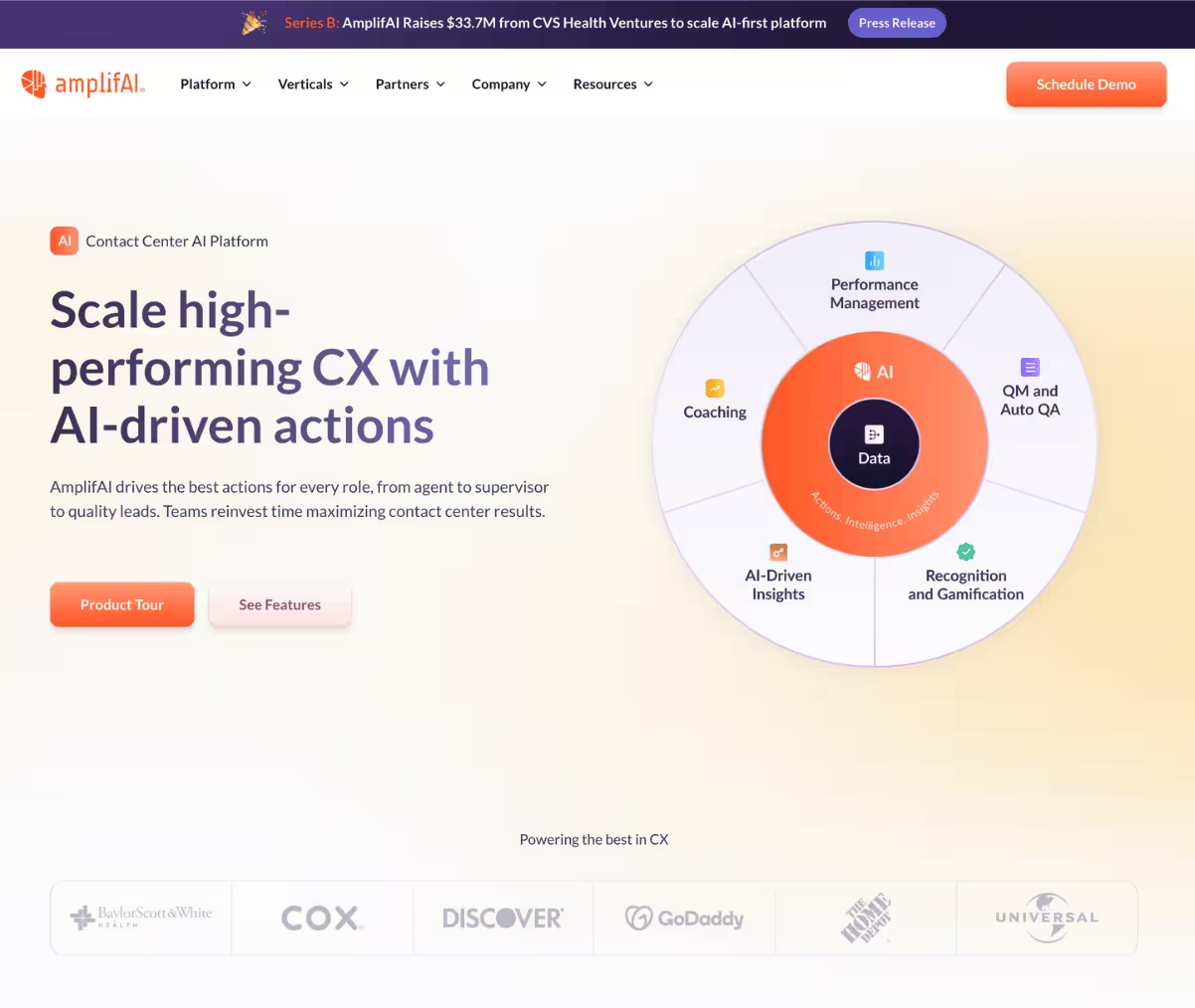
AmplifAI contact center AI software is an AI-native platform powered by agnostic data integration across 150+ sources including CCaaS, CRM, WFM, QA, coaching, surveys, and legacy systems, delivering leader-facing and agent-facing AI that drives conversation intelligence, automated QA (AQA), quality management, coaching workflows, performance dashboards, gamification, and BPO vendor oversight from one unified data layer. AI actions including next-best coaching recommendations, compliance alerts, and recognition triggers, is powered by the same connected data foundation.
Named a Leading provider in the 2026 CMP Research Prism for Automated QA/QM.
Amplifai Contact Center AI Software Types
| Contact Center AI Type | Description | AmplifAI Capability |
|---|---|---|
| Unified Contact Center AI | Connects all data sources into a single AI-ready layer for cross-functional action. | ✅ |
| Leader-Facing Contact Center AI | Dashboards, automated QA, coaching alerts, and performance visibility for leaders. | ✅ |
| Agent-Facing Contact Center AI | Coaching prompts, performance nudges, and development workflows for agents. | ✅ |
| Customer-Facing Contact Center AI | Chatbots, smart IVR, and virtual agents handling customer interactions. | ❌ |
| CCaaS-Bundled Contact Center AI | Native AI embedded within a CCaaS platform's ecosystem. | ❌ |
AmplifAI Contact Center AI Software Features
| Feature | Description | AmplifAI Capability |
|---|---|---|
| Data Integration & Unification | Consolidates data from CCaaS, CRM, WFM, QA, surveys, and legacy systems into a unified AI-ready layer. | ✅ |
| Auto QA | AI-driven scoring of 100% of interactions without manual sampling. | ✅ |
| Quality Management | Manages QA programs at scale with scorecards, evaluation workflows, and audit trails. | ✅ |
| Performance Management | Tracks agent, team, and org-wide KPIs through role-based dashboards and benchmarking. | ✅ |
| AI-Enabled Coaching | Delivers next-best coaching actions and tracks performance lift through closed-loop workflows. | ✅ |
| Speech Analytics & Conversation Intelligence | Transcribes and analyzes voice interactions to detect sentiment, topics, and behavioral patterns. | ✅ |
| Gamification & Recognition | Drives agent engagement through leaderboards, badges, and recognition tied to performance. | ✅ |
| BPO Vendor Management | Provides oversight across outsourced operations with vendor benchmarking and SLA tracking. | ✅ |
| Customer Intelligence | Aggregates voice-of-customer insights to identify trends, churn signals, and CX opportunities. | ✅ |
| Virtual Agents & Chatbots | AI-powered conversational interfaces handling customer inquiries before agent escalation. | ❌ |
| Smart IVR & Self-Service | Natural language routing and resolution of common requests without agent involvement. | ❌ |
| Real-Time Agent Assistance | Live prompts, script guidance, and knowledge surfacing during active customer interactions. | ❌ |
Standout Features & Unique Capabilities of AmplifAI
- AI-Native Unified Data Layer: 150+ agnostic integrations across CCaaS, CRM, WFM, QA, coaching, surveys, and legacy systems feeding one continuously updating AI-ready foundation that powers every downstream capability.
- Leader-Facing AI: Next-best actions, coaching recommendations, and performance insights delivered to team leaders, QA analysts, and executives through role-based dashboards tailored to each role's priorities.
- Agent-Facing AI: Performance visibility, coaching progress, recognition, and self-development insights delivered directly to agents through personalized dashboards.
- High Performer Persona Modeling: Builds behavioral models from top-performing agents, identifying skills and patterns that drive results so AI recommendations target specific performance gaps.
- Automated QA (AQA) and Quality Management: Scores 100% of interactions across voice, chat, and email with AI-powered compliance monitoring feeding QA findings into coaching workflows.
- Conversation Intelligence and Customer Insights: Transcription, sentiment analysis, and interaction pattern analysis surfacing CX drivers, customer sentiment trends, and voice of the customer data.
- BPO and Multi-Vendor Oversight: Unified AI across multiple outsourcers and sites with cross-vendor quality calibration, performance benchmarking, and consolidated dashboards.
Best Fit: Who Should Use AmplifAI
- Enterprise and BPO contact centers with 50+ agents needing one AI platform powering QA, coaching, performance management, and customer intelligence from unified data.
- Contact centers where AI capabilities are currently fragmented across multiple vendors, each operating on partial data from their own ecosystem.
- BPOs managing AI-powered quality, coaching, and performance across multiple clients, sites, and outsourcing partners.
Considerations: What to Keep in Mind Before Choosing AmplifAI
- Smaller contact centers (<20 agents) may not require the full breadth of AI capabilities and cross-system integrations at launch
- AmplifAI does not provide contact center infrastructure (CCaaS, telephony, routing, WFM scheduling), it delivers AI on top of your existing stack
- Onboarding requires identifying and connecting your data sources to build the unified AI layer, which adds implementation time compared to single-system AI tools
Final Verdict: Is AmplifAI the Right Contact Center AI Software for You?
AmplifAI contact center AI software is built for contact centers that need one AI platform connecting every data source to every downstream action across QA, coaching, performance management, gamification, and customer intelligence. For enterprise contact centers and BPOs where AI is currently fragmented across multiple vendors operating on partial data, AmplifAI provides the unified data layer and the AI capabilities to act on it across every role in your organization.
Speak to the #1 Contact Center AI Software Vendor
2. NICE CXone Contact Center AI Software
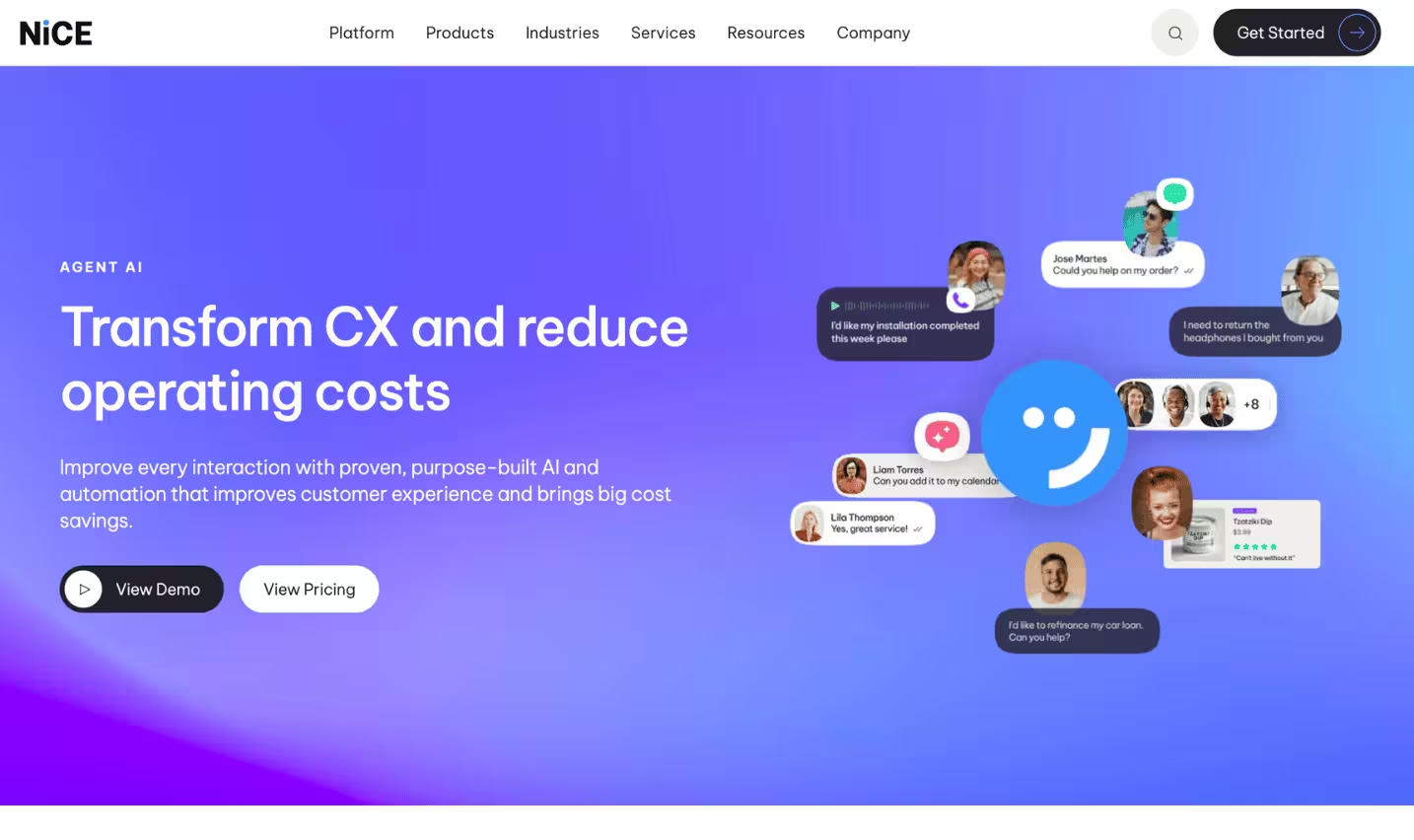
NICE CXone contact center AI software offers a full CCaaS platform with built-in auto QA, quality management, workforce management, and omnichannel routing tightly integrated within CXone. For enterprise organizations already using NICE across their contact center, it provides broad AI coverage within a single ecosystem.
NICE CXone Contact Center AI Software Types
| Contact Center AI Type | Description | NICE Capability |
|---|---|---|
| Unified Contact Center AI | Connects all data sources into a single AI-ready layer for cross-functional action. | ❌ |
| Leader-Facing Contact Center AI | Dashboards, automated QA, coaching alerts, and performance visibility for leaders. | ⚠️ |
| Agent-Facing Contact Center AI | Coaching prompts, performance nudges, and development workflows for agents. | ✅ |
| Customer-Facing Contact Center AI | Chatbots, smart IVR, and virtual agents handling customer interactions. | ✅ |
| CCaaS-Bundled Contact Center AI | Native AI embedded within a CCaaS platform's ecosystem. | ✅ |
NICE CXone Contact Center AI Software Features
| Contact Center AI Feature | Description | NICE Capability |
|---|---|---|
| Data Integration & Unification | Consolidates data from CCaaS, CRM, WFM, QA, surveys, and legacy systems into a unified AI-ready layer. | ❌ |
| Auto QA | AI-driven scoring of 100% of interactions without manual sampling. | ✅ |
| Quality Management | Manages QA programs at scale with scorecards, evaluation workflows, and audit trails. | ✅ |
| Performance Management | Tracks agent, team, and org-wide KPIs through role-based dashboards and benchmarking. | ⚠️ |
| AI-Enabled Coaching | Delivers next-best coaching actions and tracks performance lift through closed-loop workflows. | ⚠️ |
| Speech Analytics & Conversation Intelligence | Transcribes and analyzes voice interactions to detect sentiment, topics, and behavioral patterns. | ✅ |
| Gamification & Recognition | Drives agent engagement through leaderboards, badges, and recognition tied to performance. | ⚠️ |
| BPO Vendor Management | Provides oversight across outsourced operations with vendor benchmarking and SLA tracking. | ❌ |
| Customer Intelligence | Aggregates voice-of-customer insights to identify trends, churn signals, and CX opportunities. | ⚠️ |
| Virtual Agents & Chatbots | AI-powered conversational interfaces handling customer inquiries before agent escalation. | ✅ |
| Smart IVR & Self-Service | Natural language routing and resolution of common requests without agent involvement. | ✅ |
| Real-Time Agent Assistance | Live prompts, script guidance, and knowledge surfacing during active customer interactions. | ✅ |
Standout Features & Unique Capabilities of NICE CXone
- Enlighten AI: Powers auto QA scoring, sentiment analysis, and predictive routing across voice and digital interactions.
- Native Workforce Engagement: Includes workforce management, quality management, and agent scheduling within the platform.
- Omnichannel Routing: Connects customers to agents based on skills and availability across voice, chat, email, and social.
Best Fit: Who Should Use NICE CXone
- Large enterprises with deep investments in the NICE ecosystem
- Contact centers requiring native WFM, QM, and routing in one platform
- Organizations seeking broad CCaaS coverage from a single vendor
Considerations: What to Keep in Mind Before Choosing NICE
- Full value requires commitment to the NICE ecosystem across multiple modules
- Higher total cost of ownership may put it out of reach for smaller contact centers
- Limited flexibility for organizations using non-NICE systems
Final Verdict: Is NICE the Right Contact Center AI Software for You?
NICE CXone provides extensive contact center AI capabilities within a unified CCaaS platform. Designed for large-scale operations already invested in the NICE ecosystem.
Compare NICE to AmplifAI for Contact Center AI Software
Compare NICE CXone Alternatives Across 13 Software Categories
3. Genesys Contact Center AI Software
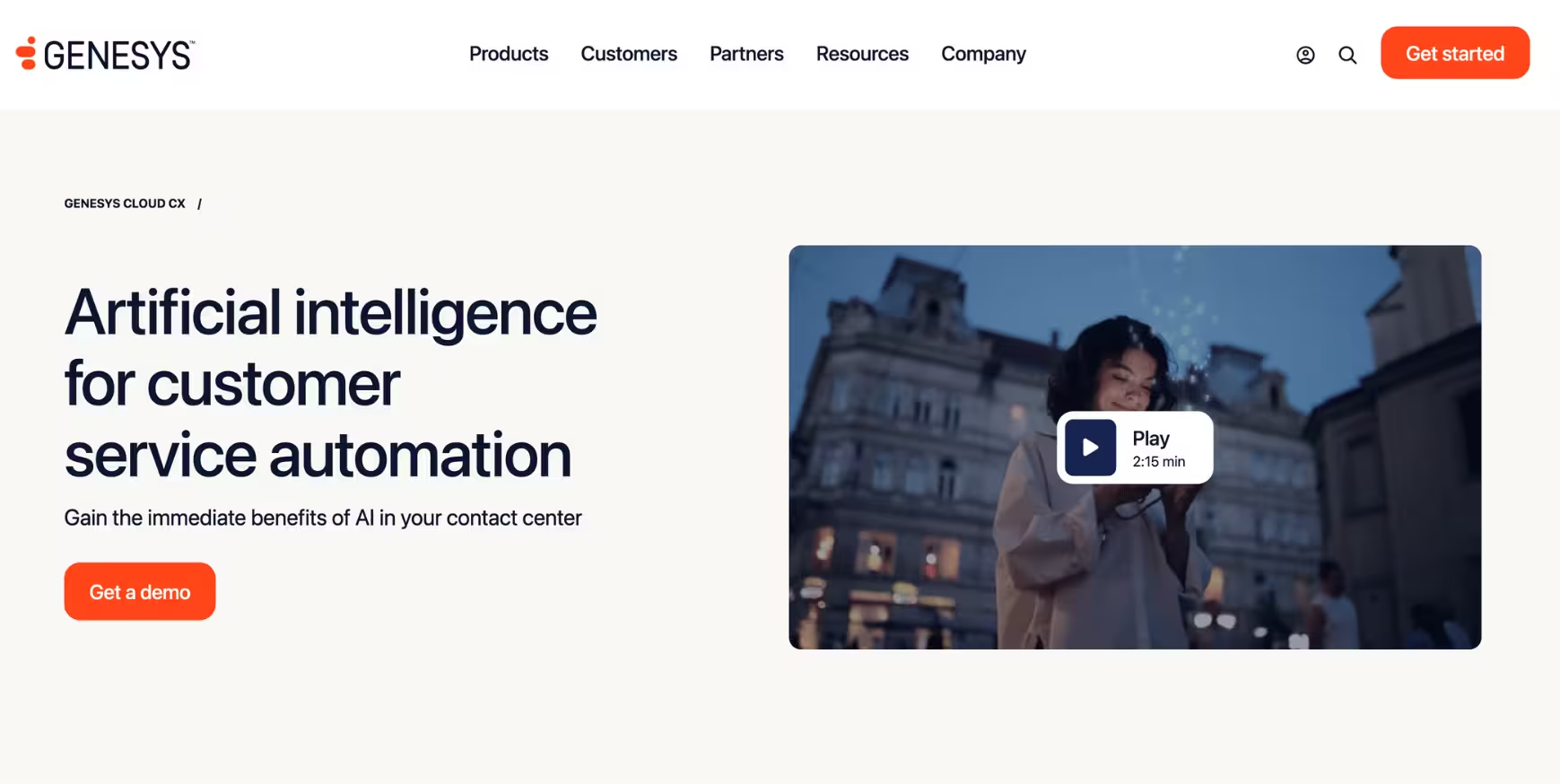
Genesys contact center AI software delivers a cloud-native CCaaS platform with built-in quality management, workforce engagement, speech analytics, and omnichannel routing through Genesys Cloud CX. For organizations already invested in the Genesys ecosystem, it offers broad coverage with AI capabilities like Agent Copilot and Virtual Supervisor embedded throughout.
Genesys Contact Center AI Software Types
| Contact Center AI Type | Description | Genesys Capability |
|---|---|---|
| Unified Contact Center AI | Connects all data sources into a single AI-ready layer for cross-functional action. | ❌ |
| Leader-Facing Contact Center AI | Dashboards, automated QA, coaching alerts, and performance visibility for leaders. | ⚠️ |
| Agent-Facing Contact Center AI | Coaching prompts, performance nudges, and development workflows for agents. | ✅ |
| Customer-Facing Contact Center AI | Chatbots, smart IVR, and virtual agents handling customer interactions. | ✅ |
| CCaaS-Bundled Contact Center AI | Native AI embedded within a CCaaS platform's ecosystem. | ✅ |
Genesys Contact Center AI Software Features
| Contact Center AI Feature | Description | Genesys Capability |
|---|---|---|
| Data Integration & Unification | Consolidates data from CCaaS, CRM, WFM, QA, surveys, and legacy systems into a unified AI-ready layer. | ❌ |
| Auto QA | AI-driven scoring of 100% of interactions without manual sampling. | ✅ |
| Quality Management | Manages QA programs at scale with scorecards, evaluation workflows, and audit trails. | ✅ |
| Performance Management | Tracks agent, team, and org-wide KPIs through role-based dashboards and benchmarking. | ⚠️ |
| AI-Enabled Coaching | Delivers next-best coaching actions and tracks performance lift through closed-loop workflows. | ⚠️ |
| Speech Analytics & Conversation Intelligence | Transcribes and analyzes voice interactions to detect sentiment, topics, and behavioral patterns. | ✅ |
| Gamification & Recognition | Drives agent engagement through leaderboards, badges, and recognition tied to performance. | ✅ |
| BPO Vendor Management | Provides oversight across outsourced operations with vendor benchmarking and SLA tracking. | ❌ |
| Customer Intelligence | Aggregates voice-of-customer insights to identify trends, churn signals, and CX opportunities. | ⚠️ |
| Virtual Agents & Chatbots | AI-powered conversational interfaces handling customer inquiries before agent escalation. | ✅ |
| Smart IVR & Self-Service | Natural language routing and resolution of common requests without agent involvement. | ✅ |
| Real-Time Agent Assistance | Live prompts, script guidance, and knowledge surfacing during active customer interactions. | ✅ |
Standout Features & Unique Capabilities of Genesys
- Virtual Supervisor: AI-powered evaluation scoring based on QM-defined prompts and criteria for automated QA workflows.
- Agent Copilot: Real-time AI assistance providing next-best-action recommendations during customer interactions.
- Workforce Engagement Management: Native scheduling, forecasting, quality management, and gamification within the platform.
Best Fit: Who Should Use Genesys
- Mid-to-large enterprises seeking a full CCaaS platform with native workforce engagement tools
- Contact centers prioritizing omnichannel routing and journey orchestration
- Organizations committed to the Genesys ecosystem for end-to-end CX management
Considerations: What to Keep in Mind Before Choosing Genesys
- Full value requires adoption across multiple Genesys Cloud modules
- Limited data unification outside the Genesys ecosystem
- Tiered pricing structure may increase costs as feature needs expand
Final Verdict: Is Genesys the Right Contact Center AI Software for You?
Genesys Cloud CX provides a comprehensive CCaaS platform with AI-powered quality management, workforce engagement, and real-time agent assistance. Designed for organizations seeking an all-in-one cloud solution within the Genesys ecosystem.
Compare Genesys to AmplifAI for Contact Center AI Software
4. Five9 Contact Center AI Software
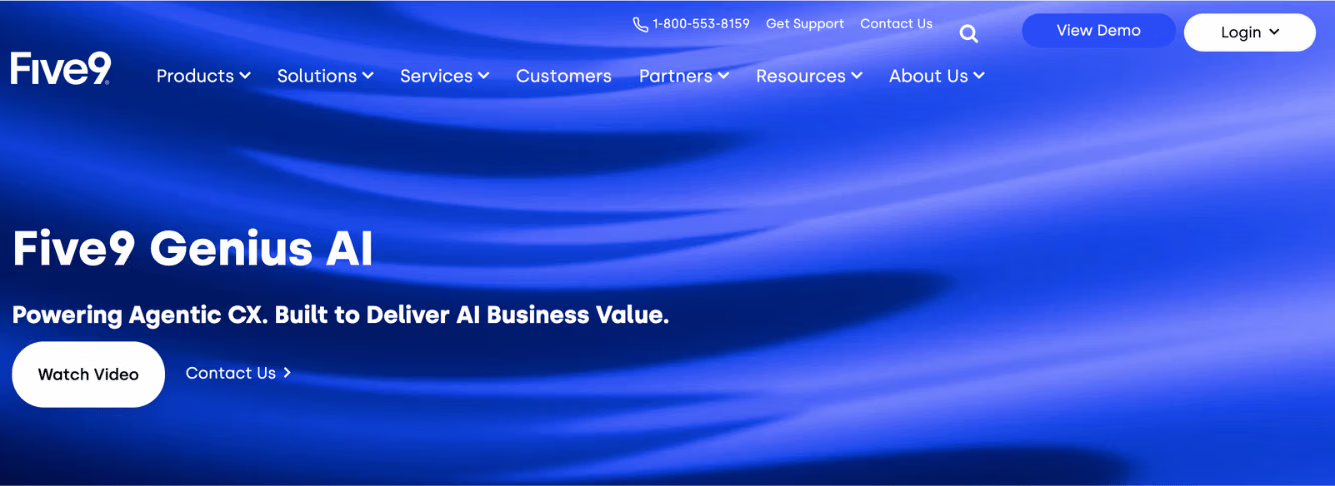
Five9 contact center AI software delivers a cloud-native CCaaS platform with AI capabilities across routing, quality management, and analytics. With Agentic Quality Management for automated evaluations, Intelligent Virtual Agents, and real-time Agent Assist, Five9 is positioned for mid-market and enterprise contact centers seeking omnichannel engagement with embedded AI.
Five9 Contact Center AI Types
| Contact Center AI Type | Description | Five9 Capability |
|---|---|---|
| Unified Contact Center AI | Connects all data sources into a single AI-ready layer for cross-functional action. | ❌ |
| Leader-Facing Contact Center AI | Dashboards, automated QA, coaching alerts, and performance visibility for leaders. | ⚠️ |
| Agent-Facing Contact Center AI | Coaching prompts, performance nudges, and development workflows for agents. | ✅ |
| Customer-Facing Contact Center AI | Chatbots, smart IVR, and virtual agents handling customer interactions. | ✅ |
| CCaaS-Bundled Contact Center AI | Native AI embedded within a CCaaS platform's ecosystem. | ✅ |
Five9 Contact Center AI Features
| Contact Center AI Feature | Description | Five9 Capability |
|---|---|---|
| Data Integration & Unification | Consolidates data from CCaaS, CRM, WFM, QA, surveys, and legacy systems into a unified AI-ready layer. | ❌ |
| Auto QA | AI-driven scoring of 100% of interactions without manual sampling. | ✅ |
| Quality Management | Manages QA programs at scale with scorecards, evaluation workflows, and audit trails. | ✅ |
| Performance Management | Tracks agent, team, and org-wide KPIs through role-based dashboards and benchmarking. | ⚠️ |
| AI-Enabled Coaching | Delivers next-best coaching actions and tracks performance lift through closed-loop workflows. | ⚠️ |
| Speech Analytics & Conversation Intelligence | Transcribes and analyzes voice interactions to detect sentiment, topics, and behavioral patterns. | ✅ |
| Gamification & Recognition | Drives agent engagement through leaderboards, badges, and recognition tied to performance. | ✅ |
| BPO Vendor Management | Provides oversight across outsourced operations with vendor benchmarking and SLA tracking. | ❌ |
| Customer Intelligence | Aggregates voice-of-customer insights to identify trends, churn signals, and CX opportunities. | ✅ |
| Virtual Agents & Chatbots | AI-powered conversational interfaces handling customer inquiries before agent escalation. | ✅ |
| Smart IVR & Self-Service | Natural language routing and resolution of common requests without agent involvement. | ✅ |
| Real-Time Agent Assistance | Live prompts, script guidance, and knowledge surfacing during active customer interactions. | ✅ |
Standout Features & Unique Capabilities of Five9
- Agentic Quality Management (AQM): Evaluates up to 100% of customer interactions to support routing decisions, coaching, and continuous improvement.
- Intelligent Virtual Agents: AI-powered self-service handling routine tasks like payment processing, appointment scheduling, and basic troubleshooting.
- Real-Time Agent Assist: Provides live coaching and AI-generated summaries during customer interactions.
Best Fit: Who Should Use Five9
- Mid-market and enterprise contact centers in regulated industries like healthcare, financial services, and government
- Organizations seeking scalable cloud CCaaS with AI across quality management and routing
- Contact centers needing omnichannel engagement with CRM integration
Considerations: What to Keep in Mind Before Choosing Five9
- Pricing varies by bundle and feature set, requiring evaluation of specific needs
- Full value comes from adopting the broader Five9 ecosystem and Genius AI suite
Final Verdict: Is Five9 the Right Contact Center AI Software for You?
Five9 offers solid CCaaS fundamentals with AI layered across quality management and routing, making it a practical choice for contact centers prioritizing automated evaluations and virtual agent self-service. Five9's strength lies in its Agentic QM capabilities and broad CRM integration ecosystem.
Compare Five9 to AmplifAI for Contact Center AI Software
Compare Five9 Alternatives Across 13 Software Categories
5. Dialpad Contact Center AI Software
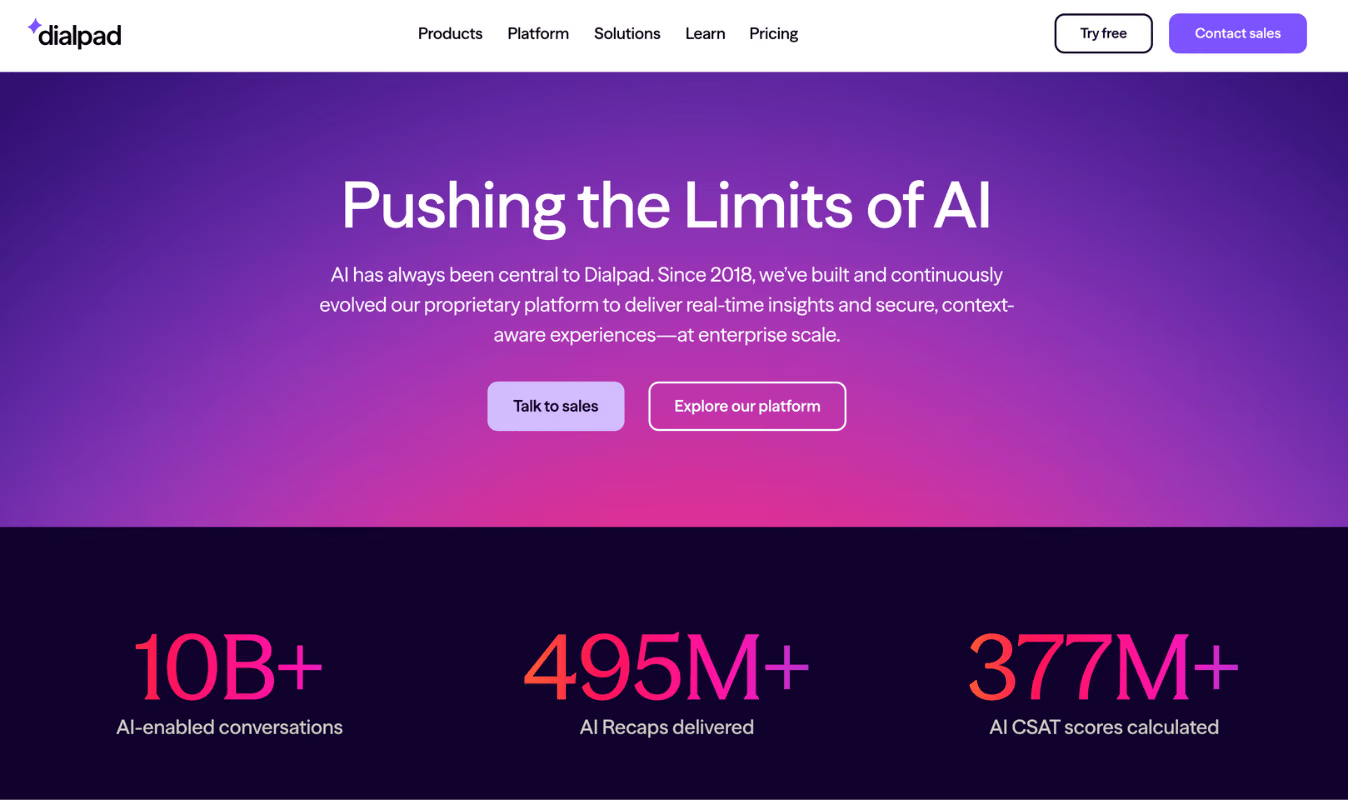
Dialpad contact center AI software delivers AI-powered scorecards and automated conversation analysis to contact centers. With its cloud-native architecture and real-time AI capabilities, Dialpad automatically grades every interaction while providing live coaching through AI-prompted agent assistance. As a unified communications platform that includes contact center AI functionality, Dialpad is suited for growing companies seeking quick deployment and AI-driven insights without extensive infrastructure requirements.
Dialpad Contact Center AI Software Types
| Contact Center AI Type | Description | Dialpad Capability |
|---|---|---|
| Unified Contact Center AI | Connects all data sources into a single AI-ready layer for cross-functional action. | ❌ |
| Leader-Facing Contact Center AI | Dashboards, automated QA, coaching alerts, and performance visibility for leaders. | ⚠️ |
| Agent-Facing Contact Center AI | Coaching prompts, performance nudges, and development workflows for agents. | ✅ |
| Customer-Facing Contact Center AI | Chatbots, smart IVR, and virtual agents handling customer interactions. | ✅ |
| CCaaS-Bundled Contact Center AI | Native AI embedded within a CCaaS platform's ecosystem. | ✅ |
Dialpad Contact Center AI Software Features
| Contact Center AI Feature | Description | Dialpad Capability |
|---|---|---|
| Data Integration & Unification | Consolidates data from CCaaS, CRM, WFM, QA, surveys, and legacy systems into a unified AI-ready layer. | ❌ |
| Auto QA | AI-driven scoring of 100% of interactions without manual sampling. | ✅ |
| Quality Management | Manages QA programs at scale with scorecards, evaluation workflows, and audit trails. | ✅ |
| Performance Management | Tracks agent, team, and org-wide KPIs through role-based dashboards and benchmarking. | ⚠️ |
| AI-Enabled Coaching | Delivers next-best coaching actions and tracks performance lift through closed-loop workflows. | ⚠️ |
| Speech Analytics & Conversation Intelligence | Transcribes and analyzes voice interactions to detect sentiment, topics, and behavioral patterns. | ✅ |
| Gamification & Recognition | Drives agent engagement through leaderboards, badges, and recognition tied to performance. | ❌ |
| BPO Vendor Management | Provides oversight across outsourced operations with vendor benchmarking and SLA tracking. | ❌ |
| Customer Intelligence | Aggregates voice-of-customer insights to identify trends, churn signals, and CX opportunities. | ⚠️ |
| Virtual Agents & Chatbots | AI-powered conversational interfaces handling customer inquiries before agent escalation. | ✅ |
| Smart IVR & Self-Service | Natural language routing and resolution of common requests without agent involvement. | ✅ |
| Real-Time Agent Assistance | Live prompts, script guidance, and knowledge surfacing during active customer interactions. | ✅ |
Standout Features & Unique Capabilities of Dialpad
- Real-Time AI Transcripts, Sentiment & Live Coaching: Gives agents instant guidance and supervisors visibility mid-call, improving service quality and response consistency.
- AI-Driven Quality Assurance, CSAT & Analytics: Automates quality scoring and satisfaction insights, helping teams spot coaching needs and boost customer experience.
- Omnichannel Routing + Conversational AI / Self-Service: Unifies calls, chat, and messages with smart routing and self-service bots, reducing wait times and agent workload.
Best Fit: Who Should Use Dialpad
- Organizations seeking cloud-native, AI-powered contact center capabilities without heavy infrastructure
- Contact centers looking for quick deployment with AI they can adopt gradually as they grow
Considerations: What to Keep in Mind Before Choosing Dialpad
- AI features may seem advanced at first for smaller teams, but scale smoothly as operations expand
- Best suited for organizations operating within a unified communications environment
Final Verdict: Is Dialpad the Right Contact Center AI Software for You?
Dialpad delivers solid contact center AI through AI Scorecards and automated interaction grading, making it a practical choice for teams seeking cloud-based quality monitoring with minimal setup complexity. Dialpad's strength lies in real-time AI capabilities and integration within a broader unified communications platform.
6. Verint Contact Center AI Software
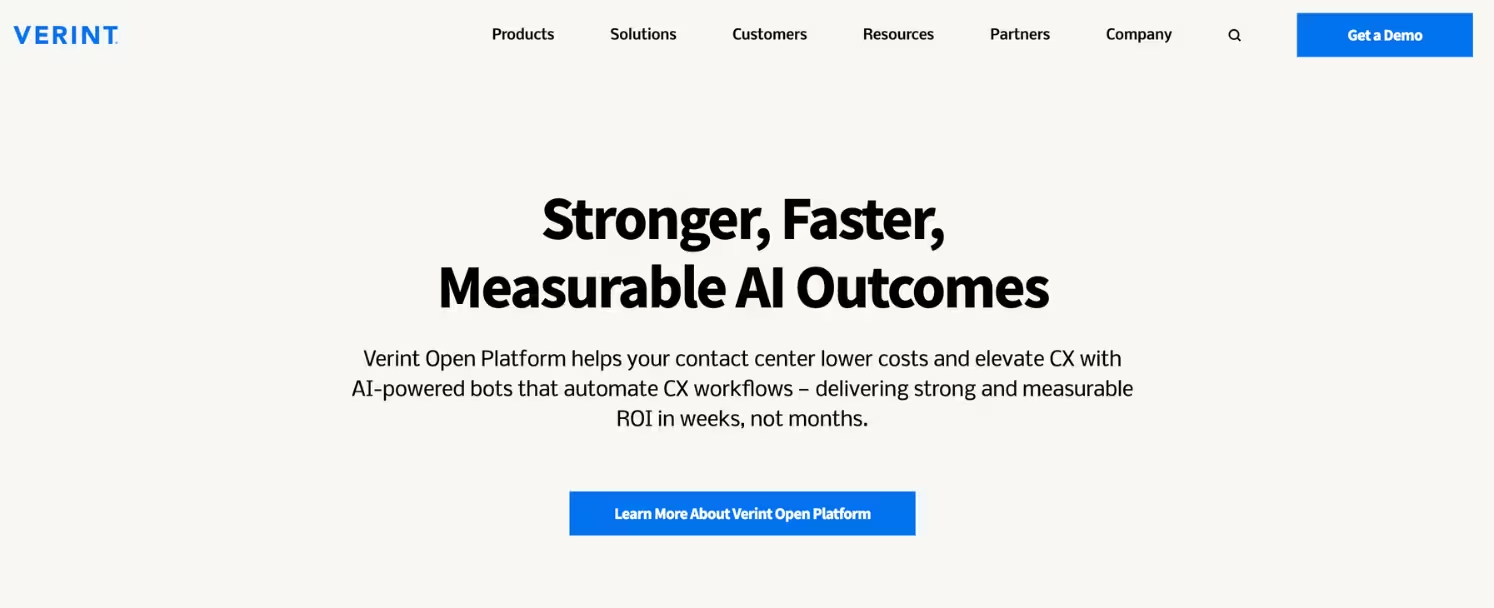
Verint contact center AI software delivers workforce engagement management with AI-powered bots for quality management, workforce management, speech analytics, and performance tracking. The Verint Open Platform integrates with existing CCaaS solutions to automate QA evaluations, optimize scheduling, and provide real-time coaching. For organizations focused on workforce optimization and quality assurance, Verint offers deep WEM capabilities across voice and digital channels.
Verint Contact Center AI Software Types
| Contact Center AI Type | Description | Verint Capability |
|---|---|---|
| Unified Contact Center AI | Connects all data sources into a single AI-ready layer for cross-functional action. | ❌ |
| Leader-Facing Contact Center AI | Dashboards, automated QA, coaching alerts, and performance visibility for leaders. | ⚠️ |
| Agent-Facing Contact Center AI | Coaching prompts, performance nudges, and development workflows for agents. | ✅ |
| Customer-Facing Contact Center AI | Chatbots, smart IVR, and virtual agents handling customer interactions. | ⚠️ |
| CCaaS-Bundled Contact Center AI | Native AI embedded within a CCaaS platform's ecosystem. | ❌ |
Verint Contact Center AI Software Features
| Contact Center AI Feature | Description | Verint Capability |
|---|---|---|
| Data Integration & Unification | Consolidates data from CCaaS, CRM, WFM, QA, surveys, and legacy systems into a unified AI-ready layer. | ❌ |
| Auto QA | AI-driven scoring of 100% of interactions without manual sampling. | ✅ |
| Quality Management | Manages QA programs at scale with scorecards, evaluation workflows, and audit trails. | ✅ |
| Performance Management | Tracks agent, team, and org-wide KPIs through role-based dashboards and benchmarking. | ⚠️ |
| AI-Enabled Coaching | Delivers next-best coaching actions and tracks performance lift through closed-loop workflows. | ⚠️ |
| Speech Analytics & Conversation Intelligence | Transcribes and analyzes voice interactions to detect sentiment, topics, and behavioral patterns. | ✅ |
| Gamification & Recognition | Drives agent engagement through leaderboards, badges, and recognition tied to performance. | ⚠️ |
| BPO Vendor Management | Provides oversight across outsourced operations with vendor benchmarking and SLA tracking. | ❌ |
| Customer Intelligence | Aggregates voice-of-customer insights to identify trends, churn signals, and CX opportunities. | ⚠️ |
| Virtual Agents & Chatbots | AI-powered conversational interfaces handling customer inquiries before agent escalation. | ⚠️ |
| Smart IVR & Self-Service | Natural language routing and resolution of common requests without agent involvement. | ⚠️ |
| Real-Time Agent Assistance | Live prompts, script guidance, and knowledge surfacing during active customer interactions. | ✅ |
Standout Features & Unique Capabilities of Verint
- Quality Bot: Automates evaluation of up to 100% of interactions with AI-powered scoring against defined rules.
- TimeFlex Bot: AI and gamification-driven scheduling flexibility that improves agent work-life balance and reduces attrition.
- Speech Analytics: Transcribes and analyzes calls to detect keywords, sentiment, and compliance risks across all recorded interactions.
Best Fit: Who Should Use Verint
- Contact centers seeking best-of-breed workforce engagement management alongside their existing CCaaS
- Organizations prioritizing quality monitoring, compliance, and workforce optimization
- Enterprises with complex scheduling needs across multiple channels and locations
Considerations: What to Keep in Mind Before Choosing Verint
- Not a CCaaS platform; requires integration with existing contact center infrastructure
- Strength is in WEM and quality management rather than end-to-end contact center AI
- May require multiple modules to achieve full workforce engagement coverage
Final Verdict: Is Verint the Right Contact Center AI Software for You?
Verint provides market-leading workforce engagement management with AI-powered bots for quality, scheduling, and performance. Best suited for organizations seeking WEM capabilities to complement their existing contact center platform.
Compare Verint to AmplifAI for Contact Center AI Software
7. Nextiva Contact Center AI Software
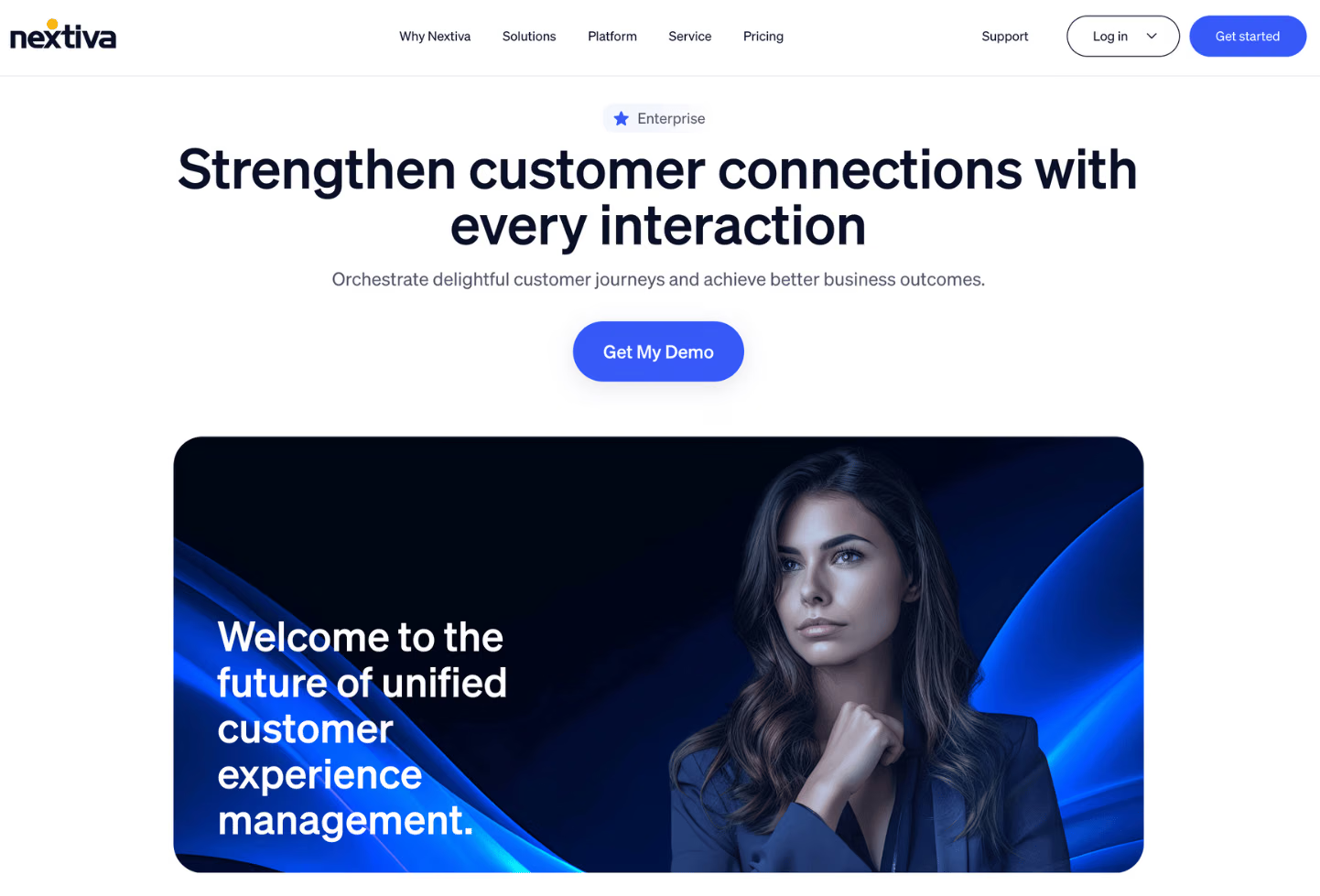
Nextiva contact center AI software delivers a unified customer experience management platform combining voice, chat, email, SMS, and social in a single AI-powered interface. With real-time coaching prompts, AI transcription with tone analysis, and intelligent IVR routing, Nextiva provides contact centers with omnichannel capabilities and embedded AI across customer touchpoints. Recognized as a Strong Performer in the 2025 Gartner Peer Insights for CCaaS, Nextiva is suited for businesses seeking unified communications with contact center functionality.
Nextiva Contact Center AI Software Types
| Contact Center AI Type | Description | Nextiva Capability |
|---|---|---|
| Unified Contact Center AI | Connects all data sources into a single AI-ready layer for cross-functional action. | ❌ |
| Leader-Facing Contact Center AI | Dashboards, automated QA, coaching alerts, and performance visibility for leaders. | ⚠️ |
| Agent-Facing Contact Center AI | Coaching prompts, performance nudges, and development workflows for agents. | ✅ |
| Customer-Facing Contact Center AI | Chatbots, smart IVR, and virtual agents handling customer interactions. | ✅ |
| CCaaS-Bundled Contact Center AI | Native AI embedded within a CCaaS platform's ecosystem. | ✅ |
Nextiva Contact Center AI Software Features
| Contact Center AI Feature | Description | Nextiva Capability |
|---|---|---|
| Data Integration & Unification | Consolidates data from CCaaS, CRM, WFM, QA, surveys, and legacy systems into a unified AI-ready layer. | ❌ |
| Auto QA | AI-driven scoring of 100% of interactions without manual sampling. | ⚠️ |
| Quality Management | Manages QA programs at scale with scorecards, evaluation workflows, and audit trails. | ⚠️ |
| Performance Management | Tracks agent, team, and org-wide KPIs through role-based dashboards and benchmarking. | ⚠️ |
| AI-Enabled Coaching | Delivers next-best coaching actions and tracks performance lift through closed-loop workflows. | ⚠️ |
| Speech Analytics & Conversation Intelligence | Transcribes and analyzes voice interactions to detect sentiment, topics, and behavioral patterns. | ✅ |
| Gamification & Recognition | Drives agent engagement through leaderboards, badges, and recognition tied to performance. | ❌ |
| BPO Vendor Management | Provides oversight across outsourced operations with vendor benchmarking and SLA tracking. | ❌ |
| Customer Intelligence | Aggregates voice-of-customer insights to identify trends, churn signals, and CX opportunities. | ⚠️ |
| Virtual Agents & Chatbots | AI-powered conversational interfaces handling customer inquiries before agent escalation. | ✅ |
| Smart IVR & Self-Service | Natural language routing and resolution of common requests without agent involvement. | ✅ |
| Real-Time Agent Assistance | Live prompts, script guidance, and knowledge surfacing during active customer interactions. | ✅ |
Standout Features & Unique Capabilities of Nextiva
- Real-Time Coaching Prompts: AI suggests responses and coaching during live calls, helping agents handle conversations consistently.
- AI Transcription with Tone Analysis: Full-text transcripts with sentiment indicators showing speaker emotion on each line.
- Unified Omnichannel Dashboard: Voice, chat, email, SMS, and social managed in one interface with context preserved across channels.
Best Fit: Who Should Use Nextiva
- Businesses seeking to consolidate all customer communication on a single platform
- Contact centers needing omnichannel support with unified customer context
- Organizations wanting embedded AI within a broader unified communications suite
Considerations: What to Keep in Mind Before Choosing Nextiva
- Contact center plans are priced separately from core unified communications offerings
- Full value comes from adopting the broader Nextiva ecosystem
Final Verdict: Is Nextiva the Right Contact Center AI Software for You?
Nextiva delivers a unified communications platform with embedded contact center AI, making it a practical choice for businesses seeking omnichannel support and real-time coaching within a single interface. Nextiva's strength lies in consolidating customer interactions across channels with AI-powered insights.
8. Observe.AI Contact Center AI Software
Observe.AI contact center AI software delivers a conversation intelligence platform focused on auto QA, speech analytics, and real-time agent assist. Observe analyzes 100% of voice and digital interactions to surface insights, automate evaluations, and deliver personalized coaching workflows. For contact centers prioritizing QA coverage and conversation analytics, Observe.AI provides strong speech-to-insight capabilities across customer interactions.
Observe.AI Contact Center AI Types
| Contact Center AI Type | Description | Observe.AI Capability |
|---|---|---|
| Unified Contact Center AI | Connects all data sources into a single AI-ready layer for cross-functional action. | ❌ |
| Leader-Facing Contact Center AI | Dashboards, automated QA, coaching alerts, and performance visibility for leaders. | ⚠️ |
| Agent-Facing Contact Center AI | Coaching prompts, performance nudges, and development workflows for agents. | ✅ |
| Customer-Facing Contact Center AI | Chatbots, smart IVR, and virtual agents handling customer interactions. | ❌ |
| CCaaS-Bundled Contact Center AI | Native AI embedded within a CCaaS platform's ecosystem. | ❌ |
Observe.AI Contact Center AI Features
| Contact Center AI Feature | Description | Observe.AI Capability |
|---|---|---|
| Data Integration & Unification | Consolidates data from CCaaS, CRM, WFM, QA, surveys, and legacy systems into a unified AI-ready layer. | ❌ |
| Auto QA | AI-driven scoring of 100% of interactions without manual sampling. | ✅ |
| Quality Management | Manages QA programs at scale with scorecards, evaluation workflows, and audit trails. | ✅ |
| Performance Management | Tracks agent, team, and org-wide KPIs through role-based dashboards and benchmarking. | ⚠️ |
| AI-Enabled Coaching | Delivers next-best coaching actions and tracks performance lift through closed-loop workflows. | ⚠️ |
| Speech Analytics & Conversation Intelligence | Transcribes and analyzes voice interactions to detect sentiment, topics, and behavioral patterns. | ✅ |
| Gamification & Recognition | Drives agent engagement through leaderboards, badges, and recognition tied to performance. | ❌ |
| BPO Vendor Management | Provides oversight across outsourced operations with vendor benchmarking and SLA tracking. | ❌ |
| Customer Intelligence | Aggregates voice-of-customer insights to identify trends, churn signals, and CX opportunities. | ⚠️ |
| Virtual Agents & Chatbots | AI-powered conversational interfaces handling customer inquiries before agent escalation. | ⚠️ |
| Smart IVR & Self-Service | Natural language routing and resolution of common requests without agent involvement. | ⚠️ |
| Real-Time Agent Assistance | Live prompts, script guidance, and knowledge surfacing during active customer interactions. | ✅ |
Standout Features & Unique Capabilities of Observe.AI
- Auto QA with Evidence-Based Scoring: Automates 100% of QA evaluations with AI-powered scoring, auto-suggest, auto-fill, and calibration tools.
- Agent Performance & Coaching: Evidence-backed coaching recommendations with session agendas, progress tracking, and acknowledgement workflows.
- Conversation Intelligence: Analyzes voice and chat interactions to surface sentiment, intent, compliance risks, and behavioral patterns.
Best Fit: Who Should Use Observe.AI
- Contact centers focused on scaling QA coverage without expanding headcount
- Organizations prioritizing speech analytics and conversation insights
- Teams seeking automated evaluations with coaching workflows tied to call evidence
Considerations: What to Keep in Mind Before Choosing Observe.AI
- Not a CCaaS platform; requires integration with existing contact center infrastructure
- Strong in QA and speech analytics but limited unified data capabilities across systems
- May require pairing with additional tools for full performance management
Final Verdict: Is Observe.AI the Right Contact Center AI Software for You?
Observe.AI provides conversation intelligence with auto QA, speech analytics, and coaching workflows built for contact centers scaling quality coverage. Best suited for organizations seeking AI-powered QA and agent coaching tied directly to interaction evidence.
Compare Observe.AI to AmplifAI for Contact Center AI Software
9. Balto Contact Center AI Software
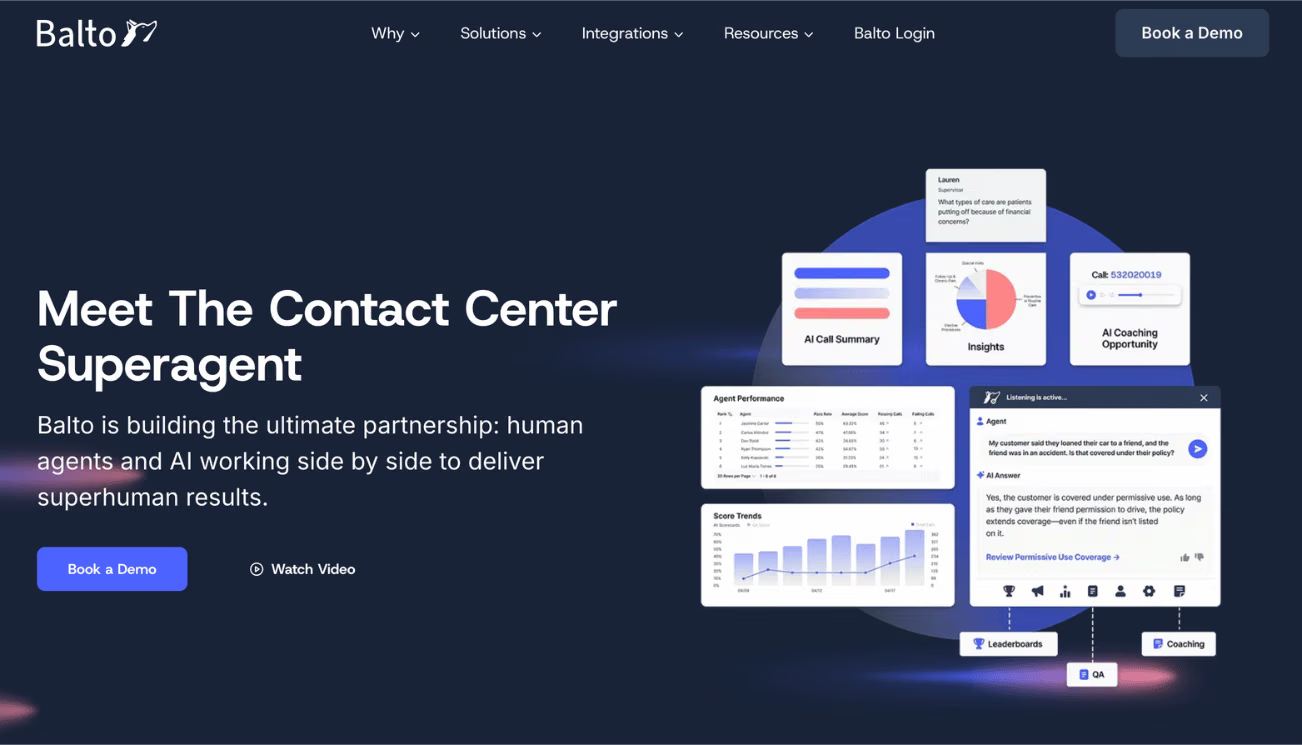
Balto contact center AI software provides real-time agent guidance, automated QA, and coaching tools that integrate with existing contact center platforms. Balto focuses on in-the-moment assistance during live calls, compliance monitoring, and AI-generated coaching packets.
Balto Contact Center AI Software Types
| Contact Center AI Type | Description | Balto Capability |
|---|---|---|
| Unified Contact Center AI | Connects all data sources into a single AI-ready layer for cross-functional action. | ❌ |
| Leader-Facing Contact Center AI | Dashboards, automated QA, coaching alerts, and performance visibility for leaders. | ⚠️ |
| Agent-Facing Contact Center AI | Coaching prompts, performance nudges, and development workflows for agents. | ✅ |
| Customer-Facing Contact Center AI | Chatbots, smart IVR, and virtual agents handling customer interactions. | ❌ |
| CCaaS-Bundled Contact Center AI | Native AI embedded within a CCaaS platform's ecosystem. | ❌ |
Balto Contact Center AI Features
| Contact Center AI Feature | Description | Balto Capability |
|---|---|---|
| Data Integration & Unification | Consolidates data from CCaaS, CRM, WFM, QA, surveys, and legacy systems into a unified AI-ready layer. | ❌ |
| Auto QA | AI-driven scoring of 100% of interactions without manual sampling. | ✅ |
| Quality Management | Manages QA programs at scale with scorecards, evaluation workflows, and audit trails. | ⚠️ |
| Performance Management | Tracks agent, team, and org-wide KPIs through role-based dashboards and benchmarking. | ❌ |
| AI-Enabled Coaching | Delivers next-best coaching actions and tracks performance lift through closed-loop workflows. | ⚠️ |
| Speech Analytics & Conversation Intelligence | Transcribes and analyzes voice interactions to detect sentiment, topics, and behavioral patterns. | ✅ |
| Gamification & Recognition | Drives agent engagement through leaderboards, badges, and recognition tied to performance. | ⚠️ |
| BPO Vendor Management | Provides oversight across outsourced operations with vendor benchmarking and SLA tracking. | ❌ |
| Customer Intelligence | Aggregates voice-of-customer insights to identify trends, churn signals, and CX opportunities. | ⚠️ |
| Virtual Agents & Chatbots | AI-powered conversational interfaces handling customer inquiries before agent escalation. | ❌ |
| Smart IVR & Self-Service | Natural language routing and resolution of common requests without agent involvement. | ❌ |
| Real-Time Agent Assistance | Live prompts, script guidance, and knowledge surfacing during active customer interactions. | ✅ |
Standout Features & Unique Capabilities of Balto
- Real-Time Agent Guidance: Surfaces answers, prompts, and compliance checklists during live calls based on conversation context.
- QA Copilot: Automatically scores conversations for compliance, sentiment, and performance criteria across 100% of calls.
- AI-Generated Coaching Packets: Identifies agents needing coaching and prepares coaching moments for supervisors.
Best Fit: Who Should Use Balto
- Contact centers seeking real-time agent assistance without replacing existing CCaaS infrastructure
- Organizations prioritizing compliance monitoring and live call guidance
- Teams wanting to accelerate QA coverage and coaching preparation
Considerations: What to Keep in Mind Before Choosing Balto
- Not a CCaaS platform; requires integration with existing phone systems
- Focused on real-time guidance and QA rather than full workforce engagement
Final Verdict: Is Balto the Right Contact Center AI Software for You?
Balto provides real-time agent guidance and automated QA that integrates with existing phone systems. Its strength is live call assistance and compliance monitoring.
Compare Balto to AmplifAI for Contact Center AI Software
10. Google Contact Center AI Software
Google contact center AI software offers a modular suite of AI components including Dialogflow for virtual agents, Agent Assist for real-time guidance, and Conversational Insights for analytics. Google's CCAI Platform provides a full CCaaS option, or components integrate with existing platforms like Genesys, Avaya, and Cisco.
Google Contact Center AI Software Types
| Contact Center AI Type | Description | Google CCAI Capability |
|---|---|---|
| Unified Contact Center AI | Connects all data sources into a single AI-ready layer for cross-functional action. | ❌ |
| Leader-Facing Contact Center AI | Dashboards, automated QA, coaching alerts, and performance visibility for leaders. | ⚠️ |
| Agent-Facing Contact Center AI | Coaching prompts, performance nudges, and development workflows for agents. | ⚠️ |
| Customer-Facing Contact Center AI | Chatbots, smart IVR, and virtual agents handling customer interactions. | ✅ |
| CCaaS-Bundled Contact Center AI | Native AI embedded within a CCaaS platform's ecosystem. | ✅ |
Google Contact Center AI Software Features
| Contact Center AI Feature | Description | Google CCAI Capability |
|---|---|---|
| Data Integration & Unification | Consolidates data from CCaaS, CRM, WFM, QA, surveys, and legacy systems into a unified AI-ready layer. | ❌ |
| Auto QA | AI-driven scoring of 100% of interactions without manual sampling. | ⚠️ |
| Quality Management | Manages QA programs at scale with scorecards, evaluation workflows, and audit trails. | ⚠️ |
| Performance Management | Tracks agent, team, and org-wide KPIs through role-based dashboards and benchmarking. | ⚠️ |
| AI-Enabled Coaching | Delivers next-best coaching actions and tracks performance lift through closed-loop workflows. | ⚠️ |
| Speech Analytics & Conversation Intelligence | Transcribes and analyzes voice interactions to detect sentiment, topics, and behavioral patterns. | ✅ |
| Gamification & Recognition | Drives agent engagement through leaderboards, badges, and recognition tied to performance. | ❌ |
| BPO Vendor Management | Provides oversight across outsourced operations with vendor benchmarking and SLA tracking. | ❌ |
| Customer Intelligence | Aggregates voice-of-customer insights to identify trends, churn signals, and CX opportunities. | ⚠️ |
| Virtual Agents & Chatbots | AI-powered conversational interfaces handling customer inquiries before agent escalation. | ✅ |
| Smart IVR & Self-Service | Natural language routing and resolution of common requests without agent involvement. | ✅ |
| Real-Time Agent Assistance | Live prompts, script guidance, and knowledge surfacing during active customer interactions. | ✅ |
Standout Features & Unique Capabilities of Google CCAI
- Dialogflow CX Virtual Agents: Build conversational bots across voice, chat, and messaging with visual drag-and-drop flow builder.
- Agent Assist: Real-time suggestions, smart reply, knowledge surfacing, and live translation during active calls.
- Conversational Insights: Topic modeling, sentiment analysis, and call driver identification across interactions.
Best Fit: Who Should Use Google CCAI
- Organizations wanting to add virtual agents or real-time agent assist to existing contact center platforms
- Enterprises already invested in Google Cloud ecosystem
- Teams with technical resources to configure and calibrate AI components
Considerations: What to Keep in Mind Before Choosing Google CCAI
- Quality AI requires building scorecards, uploading training data, and calibrating models
- Agent Assist provides real-time assistance during calls but is not a coaching or development platform
- Pricing is usage-based per product component
Final Verdict: Is Google CCAI the Right Contact Center AI Software for You?
Google CCAI excels at customer-facing AI (virtual agents, IVR) and real-time agent assistance. Quality and coaching capabilities require more configuration and lack the turnkey automation of purpose-built QA platforms.
Key Takeaways
Contact center AI software varies greatly in type, capability, and deployment model to meet a broad spectrum of operational needs.
When choosing the appropriate contact center AI software, consider these factors:
- Type Alignment: Contact center AI spans five distinct types including unified, leader-facing, agent-facing, customer-facing, and CCaaS-bundled. The right fit depends on whether you're optimizing for agents, leaders, customers, or all three.
- Data Architecture: Unified data across CCaaS, CRM, WFM, QA, and surveys enables cross-functional AI. Siloed data limits what contact center AI can actually do.
- Build vs. Buy: Turnkey contact center AI delivers automation out of the box. Toolkit-style contact center AI requires configuration, training data, and technical resources to operationalize.
- Integration Model: Embedded contact center AI lives inside your CCaaS. Standalone contact center AI layers on top of existing infrastructure.
The Right Fit Matters
The best contact center AI software is the one that aligns with your contact center's specific goals, technical resources, and existing technology stack. We encourage you to request demos from the contact center AI software vendors we've featured.
If you need assistance conducting a full comparison speak to a CX leader at AmplifAI.
Speak to a CX Leader at AmplifAI
Customer Service and Support Software Buyer's Guides
Our CX specialists at AmplifAI research and evaluate customer service and support software for CX leaders, AI program owners, operations leaders, quality teams, and contact center decision-makers. AmplifAI’s buyer’s guides compare vendors across the broader customer service and support software market, covering software types, category features, best-fit use cases, key considerations, and evaluation criteria for developing your shortlist.
| Software Buyer's Guide | What It Covers | Top Vendors |
|---|---|---|
| Call Center Software | Complete taxonomy of call center software categories with top vendors for customer service and support | AmplifAI, NICE, Genesys, Verint, CallMiner |
| Contact Center as a Service (CCaaS) Software | Full review and comparison of the best Contact Center as a Service (CCaaS) software in 2026 | NICE CXone, Genesys Cloud CX, Five9, Zoom, Talkdesk |
| Call Center CRM Software | Full review and comparison of the best call center CRM software in 2026 | Salesforce Service Cloud, Microsoft Dynamics 365, HubSpot Service Hub, Zoho CRM, Oracle CX |
| Contact Center AI Software | Full review and comparison of the best contact center AI software in 2026 | AmplifAI, Dialpad, Five9, Genesys, NICE |
| AI Agent Management Software | Full review and comparison of the best AI agent management software for customer service in 2026 | AmplifAI, Cresta, NICE, Observe.AI, Kore.ai |
| Call Center Workforce Management Software | Full review and comparison of the best call center workforce management software in 2026 | NICE CXone, Verint, Genesys Cloud, Assembled, Five9 |
| Call Center Speech Analytics Software | Full review and comparison of the best call center speech analytics software in 2026 | AmplifAI, CallMiner, NICE, Observe.AI, Verint |
| Call Center Analytics Software | Full review and comparison of the best call center analytics software in 2026 | AmplifAI, NICE CXone, Verint, Genesys Cloud, CallMiner |
| Call Center QA Software | Full review and comparison of the best call center QA software in 2026 | AmplifAI, CallMiner, Dialpad, NICE, Observe.AI |
| Call Center Performance Management Software | Full review and comparison of the best call center performance management software in 2026 | AmplifAI, Genesys, NICE, Talkdesk, Verint |
| Call Center Coaching Software | Full review and comparison of the best call center coaching software in 2026 | AmplifAI, Centrical, Cresta, EvaluAgent, Observe.AI |
| Call Center Gamification Software | Full review and comparison of the best call center gamification software in 2026 | AmplifAI, Centrical, Cresta, Genesys, NICE |
| Customer Insights Software | Full review and comparison of the best customer insights software in 2026 | AmplifAI, CallMiner, Cresta, Observe.AI, Tethr |
Contact Center AI Software FAQs
What are the different types of contact center AI software?
There are six types of contact center AI software serving different operational needs:
- Unified Contact Center AI - Connects all data sources into a single AI-ready layer, delivering insights and actions across roles
- Leader-Facing AI - Dashboards, automated QA, and performance visibility for supervisors, managers, and executives
- Agent-Facing AI - Real-time guidance, coaching prompts, and development tools delivered directly to agents
- Customer-Facing AI - Chatbots, virtual agents, and smart IVR handling customer interactions before agent involvement
- CCaaS-Bundled AI - Native AI features embedded within CCaaS ecosystems like NICE, Genesys, and Five9
- Internal AI / BI-Led Tools - Homegrown dashboards built on Power BI, Tableau, or spreadsheets
See all 6 types of contact center AI software for detailed descriptions and vendor examples.
Why do most contact center AI software implementations fail to deliver ROI?
Most contact center AI software fails when the AI operates on incomplete data. QA AI that can't see coaching outcomes, coaching AI that can't see QA evaluations, and customer-facing AI that can't inform agent performance management all create disconnected workflows where insights never reach the people who can act on them.
The underlying problem is fragmented data. When contact center AI software operates within a single system or vendor ecosystem, it draws conclusions from one data source while the rest of your operational picture sits in separate tools. Detection without action is observation, not improvement.
See the full analysis of contact center AI software limitations by type.
What is unified contact center AI software?
Unified contact center AI software connects data from all systems, including CCaaS, CRM, WFM, QA, coaching, surveys, and legacy applications, into a single AI-ready layer. Instead of each contact center AI tool operating on its own data, unified contact center AI software correlates patterns across every source and delivers role-specific insights to executives, QA managers, team leads, and agents.
AmplifAI is currently the only contact center AI software delivering unified AI with 150+ integrations pulling data from every system into one connected layer that powers Auto QA, coaching, performance management, and customer intelligence.
What is the difference between CCaaS-bundled AI and standalone contact center AI software?
CCaaS-bundled AI is embedded within contact center infrastructure from vendors like NICE, Genesys, and Five9. It operates primarily on data within that vendor's ecosystem, handling routing, transcription, sentiment scoring, and agent assist within the platform.
Standalone contact center AI software operates independently of your CCaaS, sitting above your existing infrastructure and unifying data from multiple systems. Standalone contact center AI software works with any CCaaS provider without locking you into a single ecosystem.
The tradeoff is native integration depth versus cross-platform visibility. CCaaS-bundled AI works seamlessly within its own ecosystem but creates blind spots across external systems. Standalone contact center AI software requires integrations but provides visibility across your entire operation.
Does contact center AI software include QA, coaching, and performance management?
It depends on the type. Most contact center AI software vendors address one or two of these capabilities, not all three. CCaaS-bundled AI typically includes basic QA and agent assist. Conversation intelligence vendors focus on QA scoring and speech analytics. Real-time agent assist vendors focus on in-call guidance.
AmplifAI is the only contact center AI software that combines Auto QA and quality management, AI-enabled coaching, performance management, gamification, and customer intelligence into one unified system where QA findings trigger coaching, coaching updates performance records, and outcomes are measured back to the intervention.
What contact center AI software features should I prioritize?
The features that matter most depend on which type of contact center AI software your organization needs. Customer-facing AI prioritizes virtual agents, smart IVR, and self-service capabilities. Agent-facing AI prioritizes real-time assist and coaching. Leader-facing AI prioritizes dashboards, QA automation, and performance visibility.
The features that separate leading contact center AI software from basic automation are data integration depth, role-specific action delivery, closed-loop workflows that connect detection to intervention to measurement, and measurable outcomes that prove performance lift rather than just tracking activity.
See the full contact center AI software features breakdown with vendor comparisons.
How do I evaluate contact center AI software before buying?
Evaluate contact center AI software based on eight criteria: data integration depth, vendor and platform independence, role-specific action delivery, closed-loop workflows, time to deployment, measurable outcomes, security and data privacy, and customer success support.
The most important evaluation question is whether contact center AI software can unify data from all your systems or only operates within a single ecosystem. Contact center AI that can't access your full operational picture will always produce incomplete insights.
See the full contact center AI software evaluation criteria for detailed guidance.
What is the best contact center AI software for enterprise contact centers and BPOs?
Enterprise contact centers and BPOs need contact center AI software that scales across multiple clients, teams, sites, and systems while connecting AI insights to frontline action. The best contact center AI software for large operations unifies data from every CCaaS, CRM, WFM, and legacy system in the environment rather than operating within a single vendor's ecosystem.
AmplifAI is trusted by over 150 global brands and BPOs, delivering unified contact center AI with 150+ integrations, Auto QA, AI-enabled coaching, performance management, and closed-loop workflows designed for multi-site, multi-client environments. AmplifAI was named a Leader in the 2026 CMP Research Prism Report for Automated QA and Quality Management.